Study Aquaculture in Australia
University of Tasmania
Rapid development of aquaculture has to be supported by an increased capability in aquaculture teaching and research. This was recognised in Australia as early as the 1980s when courses were first developed in Launceston. These courses became an important part of the new University of Tasmania in 1991 and undergo a continuous cycle of review and revision to ensure their relevance. The School of Aquaculture remains the only University School in Australia dedicated to teaching all aspects of aquaculture and is widely recognised as a centre for teaching and research excellence. In the 1990s it was the National Key Centre for Teaching and Research in Aquaculture funded for the maximum nine years. Today, its status is further strengthened by being part of TAFI, the Tasmanian Aquaculture and Fisheries Institute. Over the years many students, industry partners, researchers and staff have made huge contributions to the shape and direction of the School and graduates are found throughout the Australian industry as well as around the world.
Why study aquaculture?
Modern aquaculture is a young and dynamic industry. It is based on applied science (mostly biology and chemistry), technology, practical skills and experience. If you think that aquaculture degree offers only narrow career path you are wrong. There is a wide range of aquaculture industries, involving different aquatic animals and plants and different technologies. Aquaculture graduates work not only in aquaculture industry, but also in aquarium and ornamental fish industry, fisheries, marketing, policy development in state and federal government, research and education. Many jobs involve a range of activities, both outdoor and indoor, some are mostly field work, others lab work or office work. Aquaculture careers are never boring. Whatever the graduates do, studying aquaculture allowed them to follow lifestyle they always wanted, including travel, fishing, diving or surfing.
Why study at the University of Tasmania?
The University of Tasmania is one of the oldest and most respected universities in Australia. It ranks in top ten for research among Australian universities. It offers affordable tuition fees and generous scholarship schemes. Class sizes are small and students have easy access to academic staff. The University of Tasmania has international standing and is committed to excellent teaching and quality learning opportunities for its students.
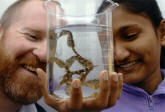
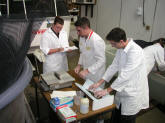
At the School of Aquaculture at the University of Tasmania students have access to the best on-campus aquaculture facilities in Australia, with pilot scale fish and shellfish production. The School houses temperate and tropical fish and shellfish species including salmon, trout, barramundi, seahorses, prawns, an algal culture and planktonic production unit, marine fish and mollusc hatcheries and sophisticated biofilter systems. All academics specialise in the areas they teach and are active researchers. School of Aquaculture maintains strong and direct links with aquaculture industry and has the largest base of aquaculture research in the Southern Hemisphere.
Why study in Tasmania?
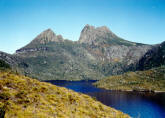
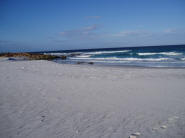
Tasmania is a wonderful place to study. It has a lower cost of living than most of other regions in Australia. Launceston is large (population 98,500) enough to have all the necessary facilities, but small enough to avoid traffic jams and enjoy friendly atmosphere. Launceston has a central location in Tasmania, in a little bit more than two hours you can drive just about anywhere. You can go to the beach or swimming or kayaking or fly fishing after classes. On summer weekends you can go surfing or snorkelling, in winter skiing is only an hour and a half drive from Launceston. Scuba diving is available all year around and Tasmania is one of the best temperate water diving destinations. If you enjoy eating seafood and buy a recreational licence you can collect abalone, crayfish and scallops while diving. Launceston has temperate climate, drier even than Hobart, which is the second driest Australian capital city (626 mm or 24 inches). Tasmania has varied landscape including beaches, coastal cliffs, rugged mountains, native forests and highland lakes. One third of Tasmania is reserved for a network of National Parks and the Tasmanian Wilderness World Heritage Area, a heaven for bushwalkers with a huge range of walks available and more than 2000 km of walking tracks.
Tasmania is the cradle of Australian aquaculture, which gives the students direct access to experienced and well established aquaculture industry, including salmonids and oyster.
What does the aquaculture industry say about School of Aquaculture, University of Tasmania?
Mr Brian Jeffriess, President of Tuna Boat Owners Association South Australia
"The UTAS School of Aquaculture is widely regarded as a world-class teaching and research institution. It has been continually successful in producing quality graduates, with practical and theoretical skills."
Mr Pheroze Jungallwala, Executive Officer, Tasmanian Salmonid Growers Association
The UTas School of Aquaculture has developed an esteemed reputation for working closely with the aquaculture industry in targeted research areas. Industrys uptake of UTas graduates is a testimonial of the high calibre of theoretical and practical teaching offered at this institution.
Dr Harry King, Saltas, Tasmania
"Located in a relatively small State which has almost 5000 km of coastline and a mass of inland waters, and which is home to one of the nation's most mature aquaculture industry sectors, the University of Tasmania's School of Aquaculture is positioned to provide its student with a unique opportunity to both study and directly experience aquaculture practices as they are conducted in a commercial setting. Accordingly, University of Tasmania Aquaculture graduates should be among the best able to put theory into practice when they enter industry."
What do international scientists say about School of Aquaculture, University of Tasmania
Dr Scott LaPatra, RD Director, Clear Springs Food Inc, Idaho, USA
I was extremely impressed with the School of Aquacultures sincere interest to contribute to industry growth and competitiveness. Speaking as an industry representative from the United States, the aquaculture industry in Australia should consider themselves extremely lucky to have the commitment by this research group to address specific problems that could significantly increase their production efficiencies and profitability.
Dr Simon Jones, Department of Fisheries and Oceanography, Pacific Biological Station, BC, Canada
"The UTAS School of Aquaculture has capitalised on its proximity to Australian aquaculture industries and its experienced faculty to develop highly-respected training programs in applied and theoretical aquaculture science".
What courses are available?
The School of Aquaculture, University of Tasmania teaches a wide range of courses designed to suit different levels of experience and requirements. It offers the following undergraduate degrees: Bachelor of Aquaculture, Bachelor of Science (Aquaculture major), Diploma in Aquaculture and a combined degree (aquaculture/commerce). The three year degree combines the broad-based approaches to marine and freshwater biology with specialist needs of aquaculture farm production and research. A new look Bachelor of Aquaculture has been offered since 2004. This new structure provides more hands-on training within the first weeks of enrolment. Students benefit from a practical understanding of fish husbandry and biology that is built upon during the rest of their degree.
The two year Diploma is a foundation course in aquaculture practice, mainly for students wishing to enter aquaculture farm workforce.
The one-year Graduate Diploma in Aquaculture would suit recently qualified degree graduates or people seeking to retrain to follow a new career. While most Graduate Diploma students have background in biological sciences, candidates with other degrees (including chemistry, computing science and arts) successfully completed Graduate Diploma. Graduate Diploma can be credited as the coursework towards Master by Coursework and Dissertation.
The School of Aquaculture accepts applications for both a traditional (February) and mid-year (July) start. Research degrees (MSc or PhD) can be started at any time of the year.
CONTACT
Location: Launceston Campus, Science Building, room 27-306
Postal Address:
Locked Bag 1370 Launceston 7250 (street address - Newnham Drive, Newnham)
Telephone: +61 3 63243801
Fax: +61 3 63243804
Email: Enquiries@aqua.utas.edu.au
Website: www.utas.edu.au/aqua
|