Dublin International Foundation College Ireland
DIFC was established in 1999 to deliver pre-university courses to
international students wishing to study at university in Ireland or the
UK.
DIFC has designed two courses to meet international student needs:
- University Foundation Programme (UFP) commenced in September
2000 for High School students. To date around 200 students have
completed this course and are now studying in colleges and
universities in Ireland and UK . DIFC has a small number of partner
colleges and universities who accept students from UFP course (see
partner colleges 2)
- Pre-Masters Programme was designed for international graduates
to help to prepare them to study on postgraduate courses in colleges
and universities in Ireland or UK . First course commenced September
2003 and students are accepted into DIFC partner colleges on
postgraduate courses.
Because of DIFC’s reputation as being the major provider in Ireland
for high quality University Foundation Programmes, NCUK signed an
exclusive agreement with DIFC in March 2004 to become their delivery
centre in Ireland for:
Undergraduate Preparation Programme - International Foundation
Year (IFY)
The IFY consists of subject modules which prepare students for
degrees in a wide range of subjects, including Business, Science and
Engineering.
For most International Students (in China for example), an important
part of the course is the English for Academic Purposes (EAP) module
which develops students' speaking, listening, writing and reading
skills, with the emphasis on the type of English needed for an academic
course.
Postgraduate Preparation Programme - Pre-Masters Programme (PMP)
The PMP provides specialised EAP and an introduction to the research
methodology skills needed to achieve success at Masters level. The
course is particularly important for students who need to improve their
general English and their study skills to succeed in their Masters
course.
NCUK’s Partner universities recognise that the PMP provides “added
value” to masters’ course applicants. PMP graduates begin their Masters
courses familiar with research methodology, practiced in research
techniques, and equipped with the level of English appropriate to
succeed with their studies.
DIFC Campus Dublin
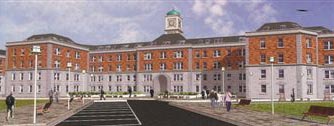
DIFC is situated on a 7 acre campus which is shared by 3 colleges. It
is just 15 minute walk to Dublin city centre.
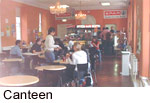
The campus has many facilities including a library, 8 computer labs,
gym, bars and restaurant.
There is a schedule of sports and social events. There are currently
5, 000 students studying on a full and part-time basis. On-campus student
housing to accommodate 600 students is currently being built and will be
ready in September 2004.
Why Study in Ireland (DIFC) compared to the UK?
-
 Cost
of Living and Fees in Dublin can be up to 30% Less than in the UK Cost
of Living and Fees in Dublin can be up to 30% Less than in the UK
- Ireland is an English speaking country
- Guaranteed Place on Degree or Postgraduate
course in NCUK Partner University in Ireland or the UK
- Can work Full-Time in Ireland on completion of
University course
- Four year Degree courses include one year
internship where students earn a salary and gain work experience to
obtain job on completion of course.
- On-campus
accommodation provides a safe and secure environment.
CONTACT
Address: DIFC Head Office, New Hall, Naas, Co.Kildare, Ireland
Phone: Int +353 45 899586
Fax: Int +353 45 898547
Email: info@difc.ie
Website:
www.difc.ie
|
|
|
CONTACT
Address: DIFC Head Office, New Hall, Naas, Co.Kildare, Ireland
Phone: Int +353 45 899586
Fax: Int +353 45 898547
Email: info@difc.ie
Website:
www.difc.ie |


|

